
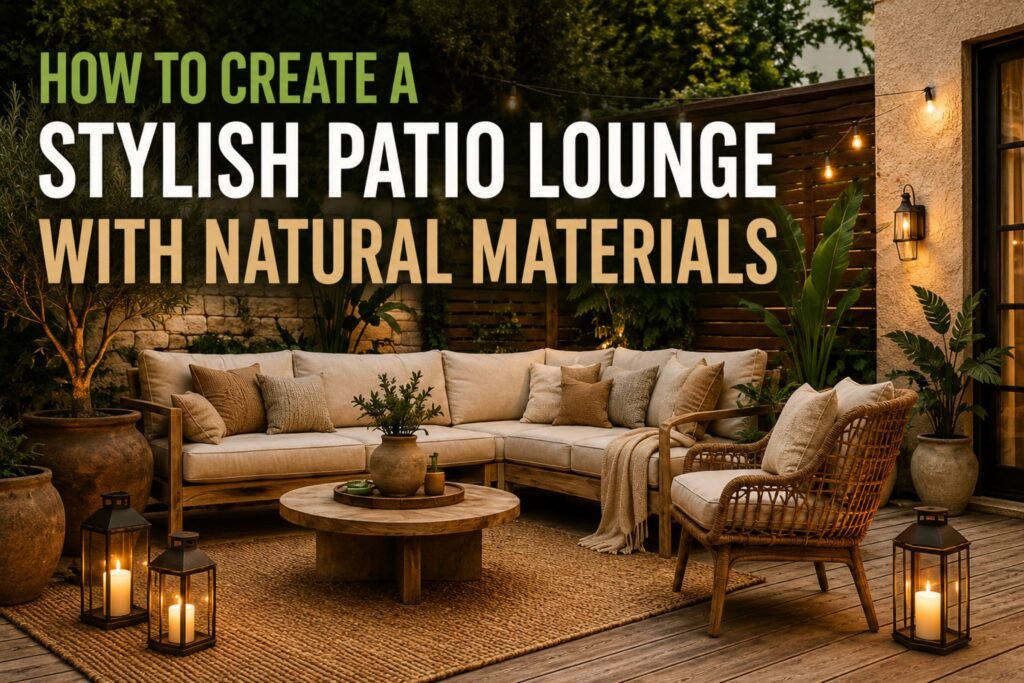
Creating an outdoor lounge space feels like the ultimate garden luxury, and for good reason. A dedicated area for relaxing, entertaining, and simply being present in your garden transforms how you actually use the space. But here’s what I’ve learned after designing dozens of patio lounges: the most inviting, livable ones aren’t achieved through expensive furniture alone. They’re created through the thoughtful layering of natural materials that age beautifully, complement rather than compete with each other, and create a sense of permanence and intention.
Natural materials possess a quiet elegance that manufactured alternatives struggle to match. Timber, stone, gravel, and living plants create a cohesive aesthetic that feels both refined and authentically connected to the landscape. More importantly, these materials improve with age. Where synthetic materials fade and deteriorate, natural ones develop character and patina that deepens their appeal over time.
If you’re imagining a patio lounge that feels like an extension of nature rather than an imposition upon it, natural materials are your foundation. Here’s how to create a space that’s both beautiful and genuinely livable.
Start With a Foundation: Stone and Gravel
Every stylish patio lounge begins with the ground you’re standing on. This foundation sets the tone for everything that follows and immediately communicates whether you’re creating a refined retreat or something more utilitarian.
Stone paving is the gold standard for patio lounges. Natural stone, whether slate, limestone, sandstone, or granite, brings undeniable sophistication. Each stone is unique, with subtle variations in color and texture that create visual interest without the monotony of uniform materials.
The type of stone you choose matters considerably. Warm-toned sandstone or limestone feels inviting and Mediterranean; cool greys and blues feel contemporary and calm. Irregular flagstone laid in a random pattern feels more organic and less formally structured than rectangular pavers aligned in strict grids. If budget allows, mixing stone types (combining slate with limestone, for instance) adds depth and prevents the eye from reading the patio as overly uniform.
The finish of your stone also influences the overall feel. Honed stone feels smooth and refined, while riven stone, with its natural split surface, is more textural and rustic. Consider that honed stone can become slippery when wet; riven finishes provide better grip and hide water stains better over time.
Gravel deserves serious consideration as either a primary patio surface or as an element layered with stone. Angular gravel in natural tones compacts well, drains beautifully, and creates a satisfying crunch underfoot that suggests purposeful movement. Pea gravel is rounder and softer underfoot, better for lounging areas where bare feet might touch ground. Larger stone chips and cobbles mixed into gravel add dimension and prevent the eye from reading the patio as flat.
The beauty of gravel is that it’s refreshable. Every few years, you add more, and your patio feels renewed without replacement. It’s also one of the most affordable ways to create a substantial-looking lounge area.
Many of the most sophisticated outdoor lounges I’ve seen combine these approaches: a central area of stone where furniture sits, transitioning to gravel at the edges, perhaps with stepping stones extending further into the garden. This layering creates zones and visual interest while keeping costs manageable.
Build Vertical Structure With Timber
If stone is your foundation, timber creates the vertical architecture that defines your lounge as a distinct space. Pergolas, screens, shade structures, and timber platforms establish boundaries, provide overhead interest, and often provide the essential element every lounge needs: dappled shade.
A well-designed timber structure feels neither imposing nor insubstantial. This is where proportion and material selection become critical. Lighter woods like cedar or larch feel more refined than heavier treated softwoods. If you’re uncertain about timber selection and construction, consulting resources like those offered through established timber suppliers can guide your choices. Companies like those at https://norweh.ca/ and https://norweh.com/ provide extensive information on timber options, qualities, and applications for outdoor structures.
A pergola, whether freestanding or attached to your house, immediately transforms a patio into a lounge. The structure provides visual definition without complete enclosure. If you’re researching established designs, you might examine styles like a Norweh timber pergola USA or Norweh timber pergola Canada, which demonstrate how quality timber construction achieves both structural integrity and aesthetic refinement.
The key to a pergola that feels stylish rather than utilitarian is intentional detailing. The spacing between slats should create rhythm. Posts should feel proportionate to the overall structure (too thick and they’re overwhelming; too thin and they look unstable). If the pergola will host climbing plants, ensure the structure can support their eventual weight and that slatting allows adequate light through once vines mature.
Timber screens serve similar functions while offering more privacy. A slatted screen feels lighter and more elegant than solid timber, allowing glimpses through to planting beyond while creating a clear visual boundary for your lounge space. Screens can be fixed or designed with hinged panels for flexibility.
Raised timber platforms, whether decking or boardwalk-style structures, elevate your lounge spatially and create a distinct zone within the broader garden. A low platform, perhaps 6 to 12 inches high, feels substantial without the commitment of a full deck. It creates a subtle separation from surrounding planting while allowing easy access.
The wood finish you choose influences the entire aesthetic. Fresh, light timber feels contemporary and clean. Weathered grey timber feels established and calm. If you’re staining timber, muted earth tones age more gracefully than bright colors. The goal is a finish that looks intentional today and only improves with age.
Layer in Comfortable Seating
Your lounge’s furniture should be crafted from natural materials that complement your hardscape and structures. This isn’t an argument against comfort; it’s an argument for comfort achieved through thoughtful design rather than synthetic shortcuts.
Timber seating remains the classic choice. Built-in benches along a pergola’s edge, positioned to catch morning light or late afternoon shade, create a sense of permanence. Timber frames paired with natural linen or wool upholstery feel luxurious without competing with your carefully composed hard materials. If you’re adding freestanding timber furniture, choose pieces with clean lines and visible wood grain rather than heavily carved or ornate designs.
Natural fiber furnishings like rattan, willow, or woven palm create texture and warmth. A rattan lounge chair paired with linen cushions feels far more sophisticated than plastic outdoor furniture, and it actually improves as it ages, developing a beautiful silver patina. The natural variation in hand-woven pieces adds character that manufactured uniformity can never match.
Stone seating might sound austere, but properly designed stone benches or seat walls become focal points. A low stone wall running along your patio’s edge doubles as seating and creates visual weight that grounds the space. Top it with timber caps or cushions for comfort.
Consider mixing furniture types rather than creating a matching set. A timber bench, a few rattan chairs, perhaps a low stone seat wall, and a substantial stone or timber table create a collected, curated feeling far more interesting than coordinated outdoor furniture from a single manufacturer.
Establish Planting Zones
Natural materials are only half the equation. Living plants, strategically positioned, are what transforms a patio lounge from a hardscape into a garden retreat.
Soft planting at the margins prevents your lounge from feeling like a hostile island of materials surrounded by garden. Grasses, perennials, and low shrubs soften the edges where stone meets lawn or planting beds. These create a transition that feels intentional rather than abrupt.
Overhead planting, whether through climbing vines on your pergola or tree canopy above, creates the psychological comfort of shelter. Soft, dappled light filtering through leaves is infinitely more welcoming than full sun or deep shade. Native climbing plants suited to your climate (clematis, jasmine, climbing roses) mature quickly and require minimal maintenance once established.
Strategic plantings can also screen undesirable views and frame desirable ones. A grouping of tall grasses or bamboo behind your lounge space creates a backdrop that feels intentional. Evergreen planting ensures winter appeal when deciduous plants drop their leaves.
The key is balance. Planting should enhance your lounge without overwhelming it or creating a jungle atmosphere. Aim for perhaps 30 to 40 percent of your view to be green and living; the remainder can be your carefully composed hardscape materials.
Add Lighting and Ambiance
As evening approaches, how your lounge feels depends largely on lighting. Natural materials continue their role here, with thoughtful illumination creating atmosphere.
Timber or stone pathway lighting guides movement while creating warm pools of light that feel inviting rather than exposed. Low-level lighting along gravel borders or stone edges defines space without harsh glare.
Overhead lighting, whether candlelight in lanterns, string lights strung through a pergola, or subtle uplighting of timber structures, extends your lounge’s usable hours. Warm-toned lighting (2700K or lower) feels more inviting than bright white light. The goal is ambiance that makes people want to linger, not interrogation-room brightness.
Candles and lanterns are timeless for a reason. They create movement and warmth that electric lighting, however well-designed, can’t quite match. Glass lanterns containing candles add both light and a sculptural element to your lounge.
Natural materials respond beautifully to evening light. Timber takes on honeyed tones. Stone gains depth and dimension. This is when the investment in quality materials truly pays dividends; they’ve been composed for daylight but continue earning their place after dark.
Create Gathering Functions
A stylish patio lounge that isn’t actually used is merely a hardscape installation. Design for the activities you’ll actually undertake.
A dining area might occupy one portion of your lounge, with a substantial timber or stone table and seating that faces toward garden views. A table carved from a single timber slab creates an immediate focal point and conversation starter.
A fire feature could anchor another zone. A timber-surround firepit or a stone-edged fire table becomes the gathering point on cool evenings. Fire creates movement, warmth, and that indefinable quality of people wanting to sit longer and talk more.
Reading nooks might be defined by a timber bench beneath a pergola, perhaps facing toward an appealing garden view or positioned to catch afternoon light. A small side table, sculpted from natural materials, provides space for coffee or a book.
A water feature, whether a simple stone basin or a more substantial timber-framed pool, adds sensory richness. The sound of water creates a sense of privacy and calm even in an urban garden, and the visual presence of water reflects light and sky, making a lounge feel more expansive.
Balance Structure and Openness
The most inviting lounge spaces feel neither cramped nor exposed. They provide definition without feeling like rooms, shelter without creating bunkers.
Achieving this balance requires restraint. It’s tempting to fill every corner with features and plantings, but space to breathe is what allows a lounge to feel luxurious. Leave areas of open stone or gravel. Allow sightlines through to garden beyond. Design structures that frame views rather than block them entirely.
A pergola overhead creates definition, but the open slats preserve connection to the sky. Planting creates privacy, but gaps remain for views and light. This interplay between structure and openness, between enclosure and exposure, is what separates a restful lounge from a claustrophobic outdoor room.
The Power of Restraint and Intentionality
Natural materials age beautifully, but only when they’re properly installed and maintained. A stone patio laid on compacted base with good drainage lasts decades. A timber structure built with quality materials and regular sealing remains sound and beautiful. Gravel refreshed annually stays tidy and inviting.
This requires attention, but it’s the kind of attention that brings you outside regularly to maintain what you’ve created. You notice seasonal changes. You observe how light moves through the pergola across the year. You become intimate with your lounge space in ways that perfect, maintenance-free synthetic alternatives can never provide.
Conclusion
Creating a stylish patio lounge with natural materials is fundamentally about composing layers: stone and gravel for foundation, timber for vertical structure, comfortable seating, living planting, thoughtful lighting, and purposeful space for actual use. Each element should feel intentional, selected for its ability to contribute to an overall composition that improves rather than deteriorates with time.
The result is a space that feels less designed and more discovered, as though your lounge was always meant to be exactly where it is, composed of exactly these materials. Guests will linger. You’ll find yourself spending more time outside. And every season, as your natural materials deepen in character, your lounge will feel even more like home.